 P
P
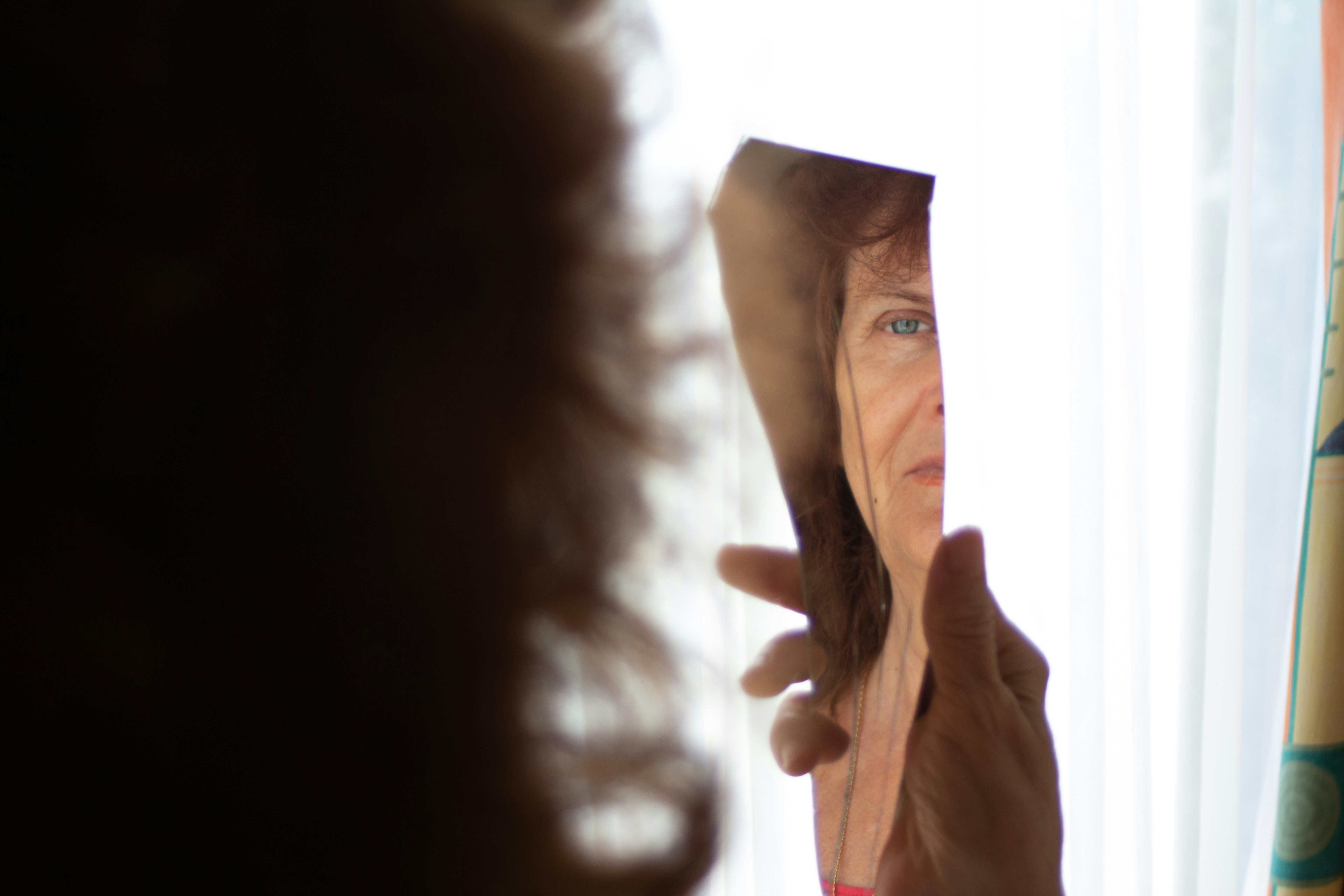
You are surrounded by people and still feel completely alone in this. Your partner does not fully understand what is happening. Your friends who are the same age seem fine, or at least they do not talk about it. Your mother did not talk about it either. And you are going through something that is changing how you feel, how you sleep, how you think, how you see yourself, with no map and very little company.
And the reason it is happening has nothing to do with your friendships and everything to do with your hormones.
This loneliness is one of the most consistent and least talked about experiences of perimenopause, and it is compounded by silence at every level. The cultural silence around menopause means that most women do not know what to expect before it begins. The social silence among women of the same age means that even close friendships often do not surface the experience until one woman finally breaks the pattern. And the medical silence, the appointments where symptoms are minimized or normalized without real support, leaves many women feeling that what they are going through does not deserve to take up space.
It deserves to take up space. You are in the middle of a significant hormonal and life transition, and feeling unseen during it is a real and reasonable response to a real gap in how this transition is held by the culture around you.
Why perimenopause is structurally isolating
Loneliness during perimenopause is not purely emotional. It is partly structural, meaning it is built into how this experience is currently treated, or not treated, in the world.
Consider the information gap. Most women arrive at perimenopause with very little preparation. Menstrual health education covers puberty and reproduction. Pregnancy and birth have extensive cultural coverage. Perimenopause has a punchline and a stereotype, and almost nothing that functions as genuine preparation for the actual experience. Women who had no prior knowledge suddenly find themselves managing an experience that is complex, unpredictable, and poorly explained, without the framework that preparation would have given them.
Consider the silence among peers. Research on perimenopause disclosure shows that women often do not talk to friends about their symptoms, either because they do not connect the symptoms to hormones, because they feel shame around aging, or because they have absorbed the cultural message that menopause is something to hide or minimize. This means that women who are experiencing the same things are often sitting in the same room and not saying so. The isolation is mutual and invisible.
Consider also that perimenopause arrives during a life phase that is often already demanding. Many women in their early to mid-40s are managing career peaks, parenting, relationship maintenance, and in some cases caring for aging parents simultaneously. There is rarely space built in for personal difficulty, for acknowledging that something is hard, or for asking for support. The norm is to keep going.
The hormonal contribution to loneliness
There is also a direct neurological dimension to the loneliness of perimenopause that is worth understanding.
Estrogen supports oxytocin, the hormone associated with social bonding, trust, and the feeling of connection with others. When estrogen fluctuates or declines, oxytocin activity can be affected, and with it the felt sense of closeness and belonging that usually makes relationships nourishing. Some women describe a perimenopausal period during which they felt strangely disconnected from people they love, not because anything had changed in the relationship, but because the internal experience of connection felt muted.
Social withdrawal driven by sensory overload, fatigue, and lowered tolerance also plays a role. When every social interaction costs more energy than it used to, and when recovery from social demands takes longer, the natural response is to reduce social exposure. This is a physiologically reasonable adaptation to current capacity. But it can narrow a woman’s world at exactly the moment when connection would be most supportive.
The symptoms that are not visible, brain fog, emotional rawness, exhaustion, the internal disorientation of feeling like a changed version of yourself, are also particularly isolating because they cannot be seen. Women with a broken leg have a cast. Women in perimenopause often look entirely fine to the people around them.
What breaks the isolation
The most reliably effective thing is finding even one other woman who is having the same experience and naming it out loud. This sounds simple, but the impact of recognition, of saying “this is happening to me” and hearing “me too,” cannot be overstated. It does not solve the symptoms, but it dissolves the shame that makes the symptoms feel like a personal failing.
Online communities, in-person perimenopause groups, and communities built specifically for women in midlife transition have expanded significantly in recent years. The quality varies, but the best of them provide the combination that most women in perimenopause are missing: information that takes the experience seriously, and company that has been through it.
Telling one trusted person what you are actually experiencing is also worth more than it might seem. Not a summarized, minimized version, but the real account: the sleep, the brain fog, the anger, the identity disorientation, the loneliness itself. Naming the full picture to someone who listens is a form of connection that directly counteracts the isolation of going through something invisible.
Seeking proper medical care reduces isolation too. When a woman receives an accurate picture of what is happening to her body and why, and when she has a healthcare provider who takes it seriously, the experience becomes less mysterious and less alone. Information is company when support is scarce.
A note for the road ahead
This transition will not last forever. Perimenopause is a phase, not a permanent state, and the symptoms, including the loneliness, tend to ease as the hormonal picture stabilizes. But waiting for it to be over is not the same as getting through it with support.
Your next step is to reach out to one person, whether that is a friend, an online community, a doctor, or all three. The isolation of perimenopause is partly built in, but it is not inevitable. And you do not have to earn connection by managing perfectly in the meantime.
Medical disclaimer: This article is for educational purposes only and is not medical advice. It is not a diagnosis, treatment plan, or substitute for care from a qualified healthcare professional. If you have concerning symptoms, seek medical care promptly.