
 P
P
There are no symptoms. That is the cruel part. Your bones have been silently losing density for years, possibly since your mid-thirties, and you have felt nothing. No pain, no warning, no moment where your body told you something was changing underneath your skin. The first sign for many women is a fracture: a wrist after a minor fall, a vertebral compression fracture from lifting something that should have been easy, a hip fracture that changes everything. By that point, significant bone loss has already happened. And the window to prevent it has been quietly closing for years.
This is not a scare story. It is a clarifying one. Because the other truth about bone health is that you have enormous influence over it, and perimenopause is exactly the right time to start using that influence before the most significant period of loss begins.
This article will explain what happens to bones during and after menopause, what the current evidence says about the most effective protective strategies, and the specific numbers and timelines you need to know to make informed decisions about your bone health.
What estrogen does for bone
Estrogen is a fundamental regulator of bone metabolism. It works by suppressing osteoclasts, the cells responsible for breaking down old bone tissue, while supporting osteoblasts, the cells that build new bone. In a young adult with healthy estrogen levels, bone breakdown and bone building remain roughly in balance. When estrogen declines, that balance tips in favor of breakdown.
According to the National Osteoporosis Foundation, women can lose up to 20% of their bone density in the first five to seven years after menopause. This is not a gradual process: it is an accelerated one, driven directly by the withdrawal of estrogen’s protective influence on the remodeling cycle. After this initial rapid-loss phase, bone loss continues but at a slower rate. The foundation built during these years matters enormously for lifetime fracture risk.
One in two women over the age of 50 will experience an osteoporosis-related fracture in their lifetime. Hip fractures in particular carry serious consequences: according to the American Academy of Orthopaedic Surgeons, approximately 20% of older adults who suffer a hip fracture die within one year from complications. Bone health is not a cosmetic issue. It is a survival issue.
Dr. Vonda Wright on musculoskeletal aging
Dr. Vonda Wright, an orthopedic surgeon and researcher who has dedicated much of her career to studying musculoskeletal health in midlife and older adults, emphasizes that bone loss is not an inevitable consequence of aging that women must simply accept. It is a preventable and, in many cases, reversible process when the right interventions are applied at the right time.
Her research consistently highlights the bidirectional relationship between muscle and bone health. Muscles attach to bones, and when muscles are working hard, they pull on bone. That mechanical loading is a key stimulus for bone remodeling. This is why women who build and maintain muscle mass through resistance training are also protecting their bone density, often more effectively than many women realize.
Dr. Wright has also been vocal about the underutilization of DEXA scanning in clinical practice. A DEXA scan measures bone mineral density and is the gold standard diagnostic tool for osteoporosis and osteopenia. The current guidelines recommend a baseline DEXA scan at age 65 for average-risk women, but Dr. Wright and other bone health advocates have argued that women with risk factors, including early menopause, family history, low body weight, smoking history, or long-term steroid use, should be screened earlier, often in their late forties or early fifties.
Resistance training: the most evidence-backed intervention
Multiple large studies confirm that progressive resistance training is the single most effective lifestyle intervention for preserving and building bone density in peri and postmenopausal women.
The mechanical loading created by lifting weights stimulates osteoblast activity through piezoelectric signaling in bone tissue. The key is that the load needs to be meaningful. Walking is good for general health but does not generate sufficient loading forces to meaningfully stimulate bone remodeling in most women. Weight-bearing cardio like jogging or hiking is better. Resistance training with progressively increasing loads is better still.
A 2017 randomized controlled trial published in the Journal of Bone and Mineral Research, known as the LIFTMOR trial, found that a twice-weekly program of high-intensity resistance and impact training significantly improved bone mineral density at the lumbar spine and femoral neck in postmenopausal women with low bone mass. Importantly, this was a program using genuinely heavy loads under supervision, not light resistance band work, and it produced clinically meaningful improvements in bone density without significant injury risk when technique was properly coached.
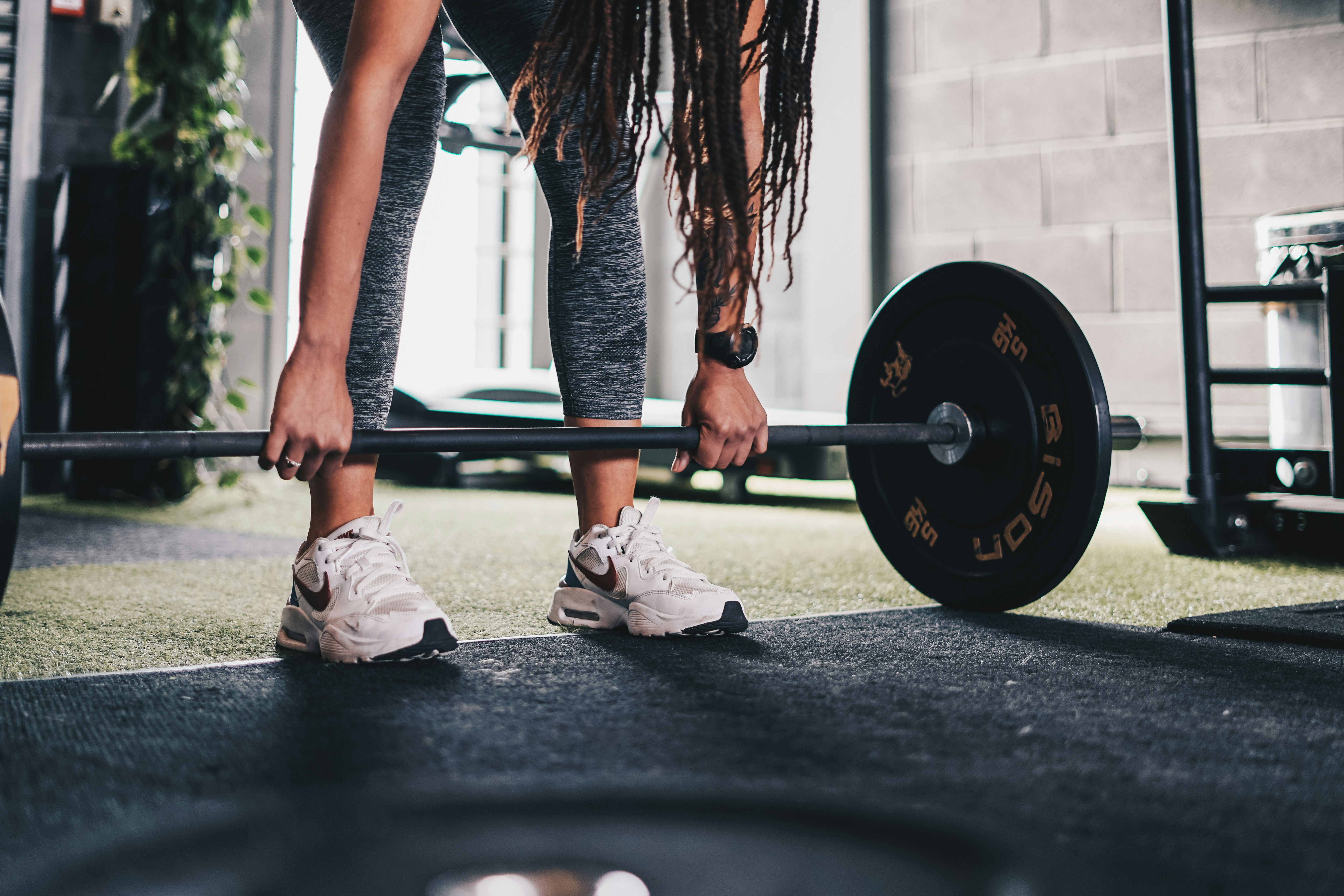
The practical implication: if bone health is a priority, which it should be for every woman in perimenopause, the resistance training program should include compound movements that load the spine and hips, the two sites most vulnerable to osteoporotic fracture. Squats, deadlifts, hip thrusts, and overhead pressing all fit this criterion.
Nutrition for bone health: calcium, vitamin D, and the K2 question
Calcium is the primary mineral component of bone. The recommended daily intake for women over 50 is 1,200mg per day, according to the National Institutes of Health Office of Dietary Supplements. Ideally this comes from food first: dairy products, fortified plant milks, canned fish with bones, leafy greens like kale and bok choy, and calcium-set tofu are all good sources. Supplements can fill gaps when dietary intake is insufficient, but calcium from food is better absorbed and carries lower risk of the adverse effects (particularly cardiovascular) that have been associated with very high-dose calcium supplementation.
Vitamin D is essential for calcium absorption. Without adequate vitamin D, the body cannot absorb calcium efficiently regardless of intake. The standard recommendation is 1,000-2,000 IU of vitamin D3 daily, but many women, particularly those who live in northern latitudes or spend limited time outdoors, need more. Testing 25(OH)D blood levels is the only way to know your actual status.
Vitamin K2 has received growing attention for its role in directing calcium into bones rather than arterial walls. Two forms exist: MK-4 and MK-7. MK-7 has the longer half-life and is better supported by the current evidence for bone health. A 2013 trial published in Osteoporosis International found that MK-7 supplementation significantly reduced age-related bone loss in healthy postmenopausal women. Vitamin K2 is found in fermented foods, particularly natto (a Japanese fermented soybean product), and in grass-fed dairy and meat.
HRT and bone protection
Hormone replacement therapy is one of the most effective interventions available for preserving bone density in menopausal women. The evidence is robust: multiple large trials confirm that HRT significantly reduces fracture risk, including hip fracture risk, in postmenopausal women.
The 2017 Menopause Society position statement on HRT and bone health notes that estrogen-containing HRT reduces the risk of all osteoporosis-related fractures, including those of the hip, vertebrae, and wrist, and that this protection applies to women with and without a prior history of fractures.
The timing of HRT initiation matters for maximizing bone benefit: starting during perimenopause or early postmenopause, before the rapid-loss phase accelerates, provides the greatest protection. But bone benefits have been demonstrated even in women who start HRT later.
For women who cannot take estrogen, other prescription options for bone protection include bisphosphonates, denosumab, and the newer osteoanabolic agents. These are worth discussing with your doctor, particularly if a DEXA scan reveals osteopenia or osteoporosis.
When to get a DEXA scan
Current guidelines from the US Preventive Services Task Force recommend DEXA screening at 65 for average-risk women. However, women with any of the following risk factors should discuss earlier screening with their doctor: early or surgical menopause (before 45), family history of osteoporosis or low-trauma fracture, long-term corticosteroid use, low body weight (BMI under 19), history of an eating disorder, smoking or heavy alcohol use, or a medical condition that affects bone metabolism such as rheumatoid arthritis, celiac disease, or hyperthyroidism.
If you are approaching perimenopause, this is the right time to discuss bone health with your doctor, ask about your personal risk factors, and understand what your DEXA timing should be. The bones you protect now are the ones you will rely on for the next four or five decades.
Bone loss is invisible. But it is not inevitable. The information you now have makes it preventable.
Medical disclaimer: This article is for educational purposes only and does not constitute medical advice, diagnosis, or treatment. Always consult a qualified healthcare provider regarding any medical condition or before starting any new treatment.